Calibration is where a cinema stops being equipment
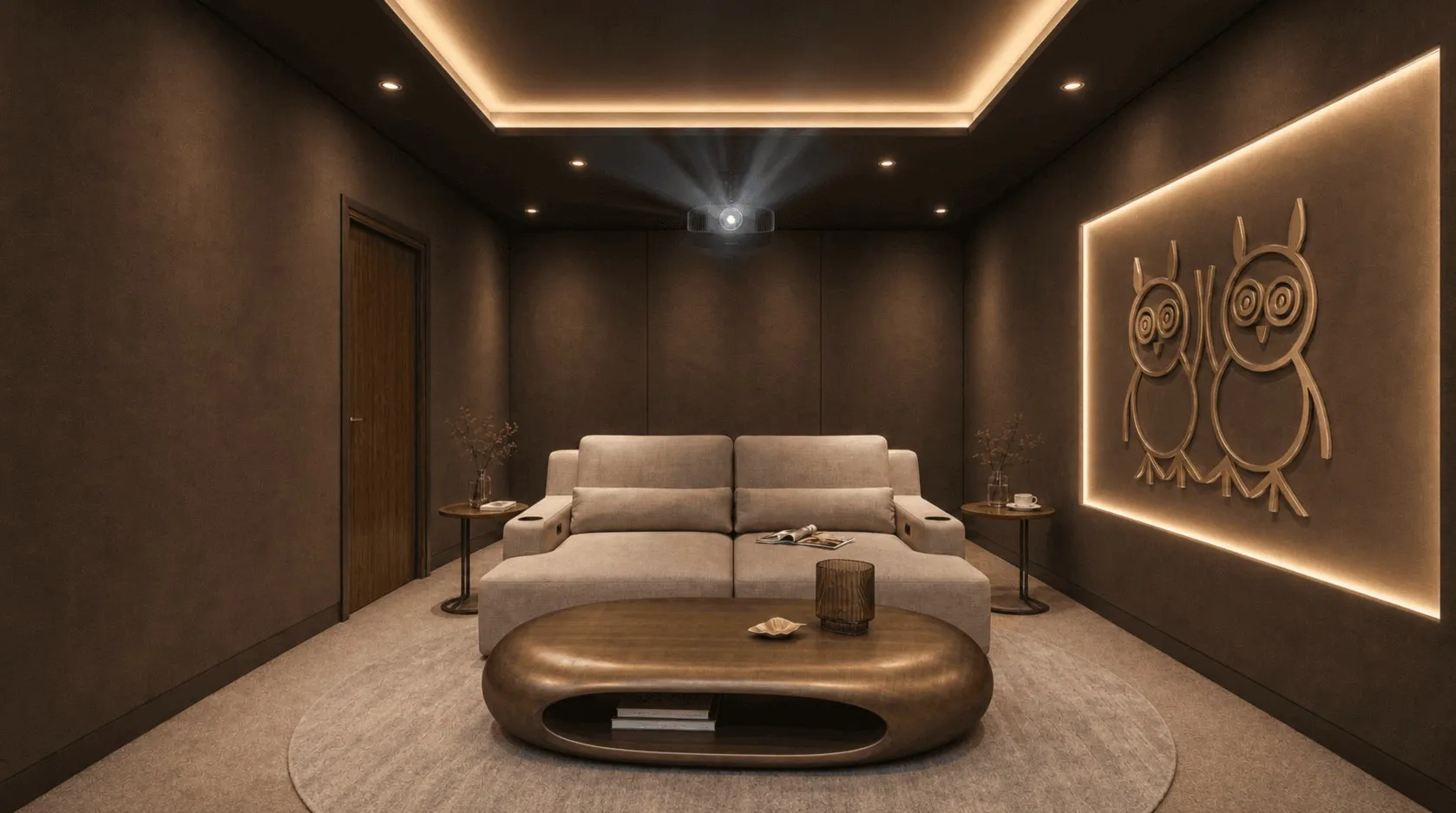
A room can be designed well, built well and installed correctly, and still not perform. Calibration is the stage that closes that gap, and it is the stage most often compressed when a project runs late.
Picture
Displays and projectors leave the factory in a mode designed to win in a showroom. Calibration replaces that with an accurate one: white point set to D65, gamma or EOTF tracking checked across the full range rather than at two points, colour verified against the standard the material was mastered to, and the light output matched to the actual screen size, gain and viewing distance — not to a specification sheet.
Projector work then adds the room itself: the screen's gain and the light the walls return are part of the measurement, which is why an instrument reading taken in the finished room is the only one that counts.
Sound
Level matching and distance setting are the beginning, not the work. The work is what happens at low frequencies, where the room dominates: measuring the actual in-room response at the actual seats, resolving what the treatment did and did not achieve, and applying correction only where correction is the right tool — peaks, where energy exists and can be reduced. Nulls stay. Boosting into a cancellation spends amplifier headroom to achieve nothing.
Subwoofer placement and phase alignment usually give more than any filter does, and both are free.
Handover
The last part is neither picture nor sound. It is making the room usable: one control gesture that gets a film playing, lighting scenes that do the right thing without being thought about, and a written record of what was set and why, so that any future change starts from the measured state rather than from scratch.
A room nobody can operate is a room that gets used twice.
More from the journal.
Notes on rooms, sound, light and the work.
A studio at the seam, and why we built it that way
Working alongside architects, without owning the room
Acoustic treatment is not the panels you can see
Begin a project.
We take on a small number of projects each year. If yours might be one of them, we’d be glad to hear from you.